
How do you rest when you worry about the planet?
- In a ten-country survey of 10,000 people aged 16 to 25, 59% were very or extremely worried about climate change, so if you carry that weight you are far from alone.
- Research on time outdoors and on acting alongside other people looks at general well-being; none of it is about a sound, and none of it claims to cure the worry.
- Caring about the planet and resting for one evening are not opposites, and letting tonight be tonight takes nothing away from tomorrow.
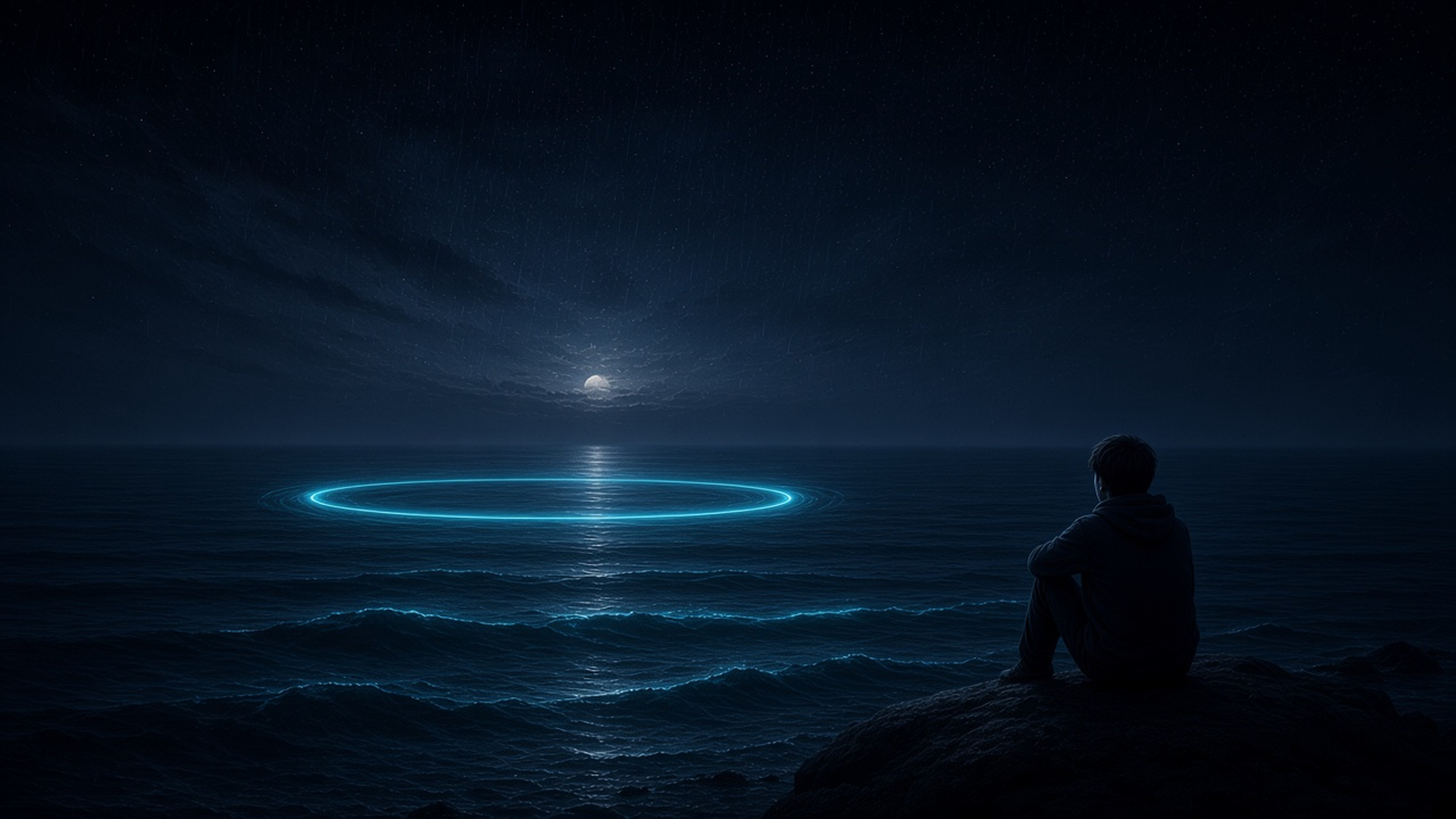
Mara pushed the borrowed bicycle up the towpath with two panniers full of other people’s rubbish, and the first streetlights were coming on over the river. A cola bottle, a car tyre, a child’s trainer with no partner, half a fishing net heavy with silt: she had pulled all of it out of the water that afternoon, and her hands still smelled of the river.
She was twenty-three, and she had come alone that morning, nervous, to a clean-up advertised on a laminated sheet in the library.
The river, and the people beside it
By mid-morning she was not alone. There were about forty of them strung along the bank, in wellingtons and borrowed gloves, passing bags hand to hand. A retired teacher who knew the name of every bird that crossed the water. Two sisters from the flats behind the gasworks. A man her own age who kept up a stream of terrible jokes while he hauled a shopping trolley out of the reeds, green and dripping.
Mara had worried about the planet for years, mostly on her own, mostly late. It was the kind of worry that waited until the day was quiet and then started asking questions she could not answer. She was not strange for feeling it. In a survey of ten thousand young people across ten countries, nearly six in ten said they were very or extremely worried about climate change. That is not a small, odd corner of people. That is most of a generation, carrying something heavy, often in private.
What struck her by the river was how different the worry felt out loud, in the open air, with forty pairs of hands working at the same small, stubborn problem. Nobody solved the climate between nine and three. They did get a trolley, a tyre and a drowned net out of one bend of one river. It was almost nothing, measured against the size of the thing. It was also the first time in months the worry had somewhere to go.
The long way home
She took the long way back, along the water and through the park rather than the main road. The light was going gold and then grey. Ducks argued about something near the reeds. A dog chased nothing in particular across the grass and came back proud.
She was not doing this for her health, exactly. But there is a quiet finding that people who spend around two hours a week in nature tend to report better health and well-being than people who spend none, and that it does not seem to matter whether those two hours come all at once or in scattered small visits like this one. A long study is not a promise, and it says nothing about anyone’s worry. Still, her shoulders had come down an inch somewhere between the gasworks and the park, and she had not told them to.
She wheeled the bike past a bench where an old man was feeding crumbs to pigeons as if he had all the time in the world. Maybe he did. Maybe that was the trick, and nobody had told her.
Letting the evening be the evening
Home, she washed the river off her hands and put the kettle on. The news was there on her phone, one tap away, and some part of her felt she ought to pay the day back by reading all of it, as a kind of penance for having enjoyed the ducks.
She didn’t. Not tonight.
She had read once that people who face climate worry entirely alone are more likely to sink under it, and that doing something alongside others seems to carry the weight differently than doing it by yourself in your head at midnight. She didn’t know if that was true for her. She did know that today she had not been by herself, and that the man with the terrible jokes had said, see you next month, as if it were already settled.
The worry had not gone anywhere. The river was still the river, the world still the world, and tomorrow she would care just as much as she had at nine that morning. None of that needed solving before she slept. Caring about the whole of it and resting for one evening were not enemies; they could sit in the same small kitchen without fighting.
Rain started against the window, soft and even, the kind that asks nothing. She put the phone face-down, leaned back, and let herself do the simplest thing left in the day, which was to stop talking and listen to it come down.
One honest caveat
None of this is medical or mental-health advice, and nothing here treats, cures or eases climate anxiety. The studies describe averages across large groups, not a forecast for any single reader, and the climate facts are real. If worry about the planet feels heavy or lasting, or starts pushing ordinary days off course, talking with a doctor or someone you trust is a real and reasonable step.
Sources
- Hickman, C., Marks, E., Pihkala, P., Clayton, S., Lewandowski, R. E., Mayall, E. E., Wray, B., Mellor, C., & van Susteren, L. (2021). Climate anxiety in children and young people and their beliefs about government responses to climate change: a global survey. The Lancet Planetary Health, 5(12), e863–e873. Link
- Schwartz, S. E. O., Benoit, L., Clayton, S., Parnes, M. F., Swenson, L., & Lowe, S. R. (2022). Climate change anxiety and mental health: Environmental activism as buffer. Current Psychology. Summary
- White, M. P., Alcock, I., Grellier, J., Wheeler, B. W., Hartig, T., Warber, S. L., Bone, A., Depledge, M. H., & Fleming, L. E. (2019). Spending at least 120 minutes a week in nature is associated with good health and wellbeing. Scientific Reports, 9, 7730. Link
This is general information, not medical or mental-health advice, and nothing here treats, cures or eases climate anxiety. The studies describe averages across large groups, not a forecast for any single reader. If worry about the climate feels heavy or lasting, or starts pushing ordinary days off course, talking with a doctor or someone you trust is a real and reasonable step.
Something plain for after a long day Steady mono noise in white, pink or brown, or a recording made in a real place, for the quiet end of an evening. Not medical.
Open moonMind